

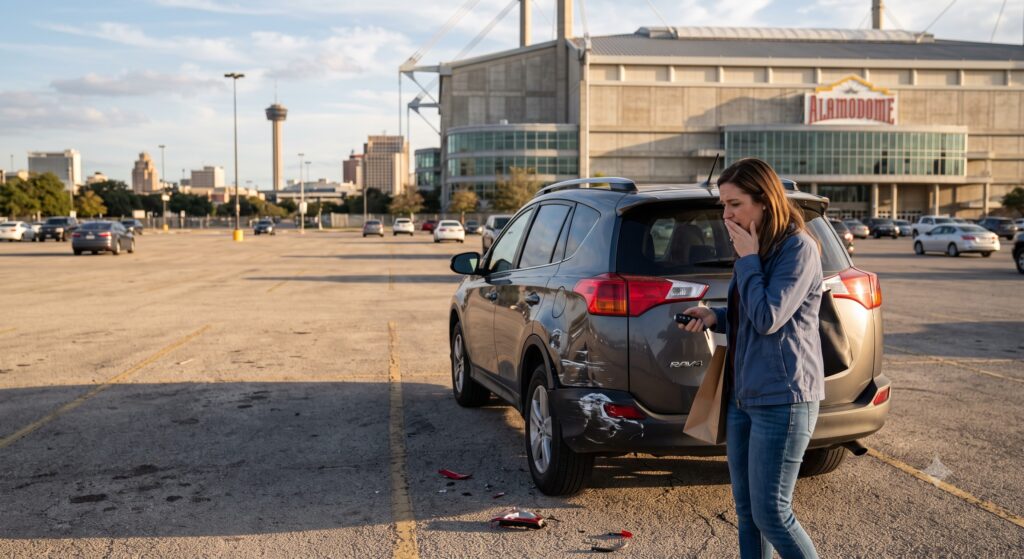
We have all been there. You walk out of the grocery store with arms full of bags. Suddenly, you spot a fresh, ugly dent on your bumper. Or maybe you are carefully backing out of a tight mall space. You check your mirrors, but out of nowhere, you hear a sudden crunch. It is time to call your auto insurance agent.
Parking lots seem like safe, low-speed zones. However, they are actually hot spots for frustrating fender benders. Because these incidents happen on private property, determining fault gets tricky.
Let us break down common parking lot headaches. We will explore who is responsible and how an independent insurance agent can help you find the right auto insurance.
1. The Battle of the Right-of-Way
Parking lots have their own traffic flow, which is heavily based on the right-of-way. Lanes generally fall into two categories:
- Thoroughfare Lanes: These are the main perimeter lanes that connect to the public roads.
- Feeder Lanes: These are the smaller aisles between rows of parked cars.
Drivers in the thoroughfare lanes hold the right-of-way. Therefore, if you pull out of a feeder lane and hit a car in the main lane, adjusters will usually find you at fault.
The Reversing Collision
This is the single most common parking lot accident. You reverse out of a space, and you hit a vehicle traveling down the aisle.
Who is at fault? The driver moving out of the space is responsible. Vehicles already moving in the feeder lane have the right-of-way. Even if the other driver was moving quickly, you must ensure the path is clear before backing up.
Two Cars Backing Up Simultaneously
You and the driver directly behind you both put your cars in reverse at the exact same moment. You both back out, and your rear bumpers meet in the middle.
Who is at fault? This situation usually results in a 50/50 split fault. Since both vehicles were in motion, both drivers shared the duty to watch out. As a result, auto insurance companies typically split the blame equally.
2. The Private Property Complication and Auto Insurance
Many drivers assume standard traffic laws do not apply in a parking lot because it is private property. While specific roadway tickets are rare, general rules of negligence still apply.
Police officers rarely issue citations in a lot unless someone is injured or a driver is reckless. Instead, officers simply help exchange information. Consequently, the final decision on fault rests with the auto insurance adjusters.
3. The “No-Note” Hit-and-Run
Returning to your vehicle to find damage without a note is incredibly stressful. If this happens to you, remain calm and follow these steps:
- Document the Damage: Do this before moving your car.
Take clear photos and videos of the scratches, dents, and any visible paint transfer.
- Look for Witnesses: Act quickly before people leave.
Ask nearby shoppers or people sitting in parked cars if they saw the collision happen.
- Speak with Store Management: Check for security cameras.
Go inside the business and report the incident. Ask if outdoor cameras captured your parking zone.
- File a Police Report: Crucial for your auto insurance claim.
Call the non-emergency police line. A formal report creates the paper trail required to use your own policy coverage.
How to Protect Yourself with the Right Auto Insurance
Parking lot crashes highlight the true value of having great auto insurance. However, shopping for coverage online can feel overwhelming. That is why working with a local independent insurance agent makes a massive difference.
Unlike captive agents who only sell one brand, an independent inaurance agency like AlphaSure Affordable Insurance Services works for several companies. They compare rates and policy options from multiple top carriers at once. This means they can easily find you the best value for your car or home insurance.
Furthermore, if you ever face a parking lot nightmare, a local agent acts as your personal advocate. They help you navigate the claims process and answer your questions.