Laredo’s World Trade Bridge and Colombia Solidarity Bridge handle a huge share of the truck traffic moving between the United States and Mexico. For drayage operators and carriers that cross south, even for short runs to Nuevo Laredo transfer yards, insurance doesn’t work the same way once the wheels cross the river.
Your Cross-Border Coverage Questions, Answered
Does my U.S. trucking policy cover me in Mexico?
Generally not for liability. Most U.S. commercial auto and trucking liability policies are written for the United States, and Mexico generally requires liability coverage from an insurer authorized to do business there. Some U.S. policies may extend limited physical damage coverage a short distance into Mexico, but liability usually isn’t one of them.
What does Mexican truck insurance typically include?
Mexican liability policies for commercial vehicles commonly address damage and injuries to others, and many include legal assistance. That matters because after a serious crash in Mexico, authorities may hold a driver or vehicle until responsibility for damages is addressed.
What about the cargo?
Cargo policies have their own territory limits. If loads cross into Mexico, confirm that your cargo coverage applies there, or arrange separate coverage. Cargo theft is a serious concern on some Mexican routes, and policy conditions on parking and security may apply.
What about trailers we pick up or drop?
Trailer interchange agreements often make the carrier responsible for damage to trailers in its care. Ask whether your policy includes trailer interchange coverage and where it applies.
Before Your Next Southbound Load
Buy Mexican liability coverage from an authorized insurer before crossing
Confirm cargo and trailer coverage territories
Keep policy documents and emergency contacts in the cab
Review your contracts with shippers and brokers for insurance requirements
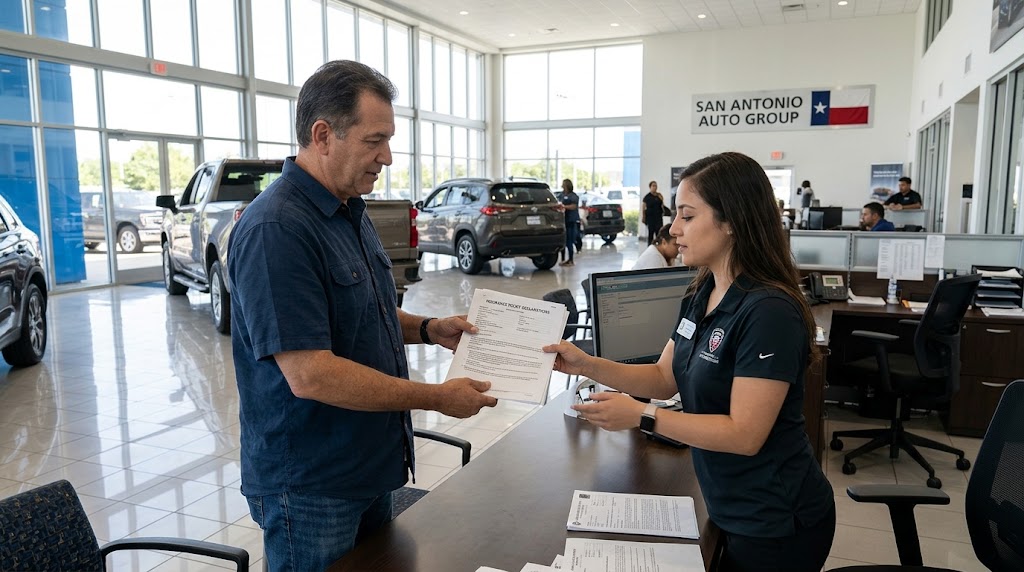
Buying a new car or truck in Texas brings a lot of excitement. However, driving off the lot without the right car insurance puts your wallet at risk. Many drivers think their current policy will cover any new vehicle right away. In general, a standard policy does give you short-term protection when you buy a car. Still, serious coverage gaps can leave you with unpaid bills after a crash. For instance, putting a new car title under your business name can void coverage on a personal auto policy. Also, a commercial auto policy or a more limited personal auto policies may not cover newly acquired vehicles automatically. Because of this, you should never guess how your policy works. Here is what every Texas driver should know about car insurance for newly bought vehicles.
How Standard Texas Car Insurance Covers a New Car
If you have an active personal car insurance policy in Texas, you usually get a short grace period. Most standard policies extend coverage to a newly bought vehicle for 14 days. During that window, you must call your insurer or agent to add the car onto your policy. On the other hand, if you do not have an active policy today, there will be no grace period. This can happen when you buy the car on the date of expiration, which will give you zero grace period. In this case you must buy a new car insurance policy or renew your expiring one and add the new car before you drive off the lot.
In addition, your new ride only gets the coverage types you already carry on your current policy. For example, suppose you only carry basic liability on your old sedan. As a result, your grace period only gives your new truck liability coverage only. It will not include collision or comprehensive coverage to fix your own truck after a wreck. Meanwhile, auto lenders require physical damage coverage before you drive off the lot. Also, some insurers cut the reporting window to just four days when you add an extra car instead of replacing one.
What Happens If Your Policy Expires Tomorrow?
Timing matters a lot when you buy a car near the end of your policy term. For instance, what happens if you buy a vehicle today, and your car insurance policy renews or expires tomorrow? In short, temporary coverage for a new vehicle never outlives your active policy contract. That grace period only works while your main policy stays in force.
Therefore, if your policy expires tomorrow and you fail to renew it, your coverage stops right then. The moment your policy lapses, your new vehicle loses all protection. Driving without active car insurance in Texas can lead to steep fines, license suspension, and huge repair bills if you are involved in an accident. To stay safe, if you bought your vehicle one day before renewal, you must add the vehicle to your policy immediately and renew your policy before it lapses. A quick phone call to your local car insurance agent will help with this process.
Three Hidden Car Insurance Gaps to Watch Out For
Even when you pay your bills on time, hidden contract rules can still catch you off guard. As a licensed Texas insurance agent since 2001, I have seen three major gaps hurt local drivers. Knowing these traps now can save you thousands of dollars later.
1. Titling Your Car Under a Business Name
Many business owners buy a car or pickup truck and title it under their corporation or LLC. Next, they drive home thinking their personal car insurance policy covers the new ride. Unfortunately, this mistake can leave you with no coverage at all.
A personal auto policy covers you and your family members as individuals. Under Texas law, however, a corporation or LLC is a separate legal entity. When you title a car under a company name, the business owns that vehicle instead of you. Because someone other than you holds the title, your personal car insurance policy may not trigger automatic coverage. If you are in an accident, the adjuster will check the title and sales receipt. Once they see a corporate name as the legal owner, they can deny the claim. Always match your policy type to the exact legal name on the title.
2. Commercial Auto Policies with Symbol 7
Suppose you already carry a commercial auto policy for your company. Because of this, you might think your business policy automatically covers a newly bought work truck. Before you drive off, however, you must check the symbols on your commercial policy declarations page.
Commercial policies use numbers from 1 to 9 to show which vehicles get coverage. Symbol 1 covers “any auto,” which gives a business broad protection. In contrast, Symbol 7 only covers listed vehicles that appear on your policy schedule by VIN.
If your commercial policy has Symbol 7, only those listed on your policy declarations page vehicles get coverage. Thus, a Symbol 7 contract leaves a newly bought truck unprotected until you add it. For example, if you buy a truck on Friday and crash it on Saturday before calling your agent, the insurer can deny your claim. Therefore, business owners with Symbol 7 must add new trucks before driving them. Here is a pro-tip, always request a written confirmation from a licensed agent that your vehicle is now covered. Do not accept a verbal confirmation from a dealer.
3. Strict Car Insurance Policies That Exclude Newly Bought Autos
Finally, not every personal car insurance policy follows standard rules. Over the years, I have seen strict policies where newly acquired autos get zero automatic coverage. Some non-standard insurers remove grace periods to keep their base rates low.
Under these strict contracts, the company only covers the exact vehicles listed on your declarations page. Whether you replace an old car or add a new one, the policy gives you no automatic protection. Instead, you must call the insurer, add the car, and make a payment before coverage begins. If you buy a car on a weekend and wait until Monday to call, you drive completely uninsured. Never assume you have a grace period until a qualified agent checks your policy.
Shop Smarter with a Local Independent Insurance Agent
Because insurance contracts have so many details, it is important to talk to a qualified agent. Online quote apps will not warn you about business titles, Symbol 7 rules, or strict exclusions. Instead, you need a local professional who can guide you when selecting an auto insurance policy.
When you work with a local independent insurance agency like AlphaSure Affordable Insurance Services, you get a dedicated partner on your side. Unlike captive agents who only sell one brand, an independent agent shops across dozens of trusted carriers for you.
Whether you are shopping for personal car insurance, commercial auto policy, or home insurance in Texas, AlphaSure Affordable Insurance Services is here to help. First, we review your coverage and provide options in plain English. Next, we compare rates from multiple companies to find the best value. Furthermore, we can check for bundle opportunities for your car insurance and home insurance for extra savings. Call an agent at AlphaSure Affordable Insurance Services before you buy your next ride so you can drive off the lot with total peace of mind.
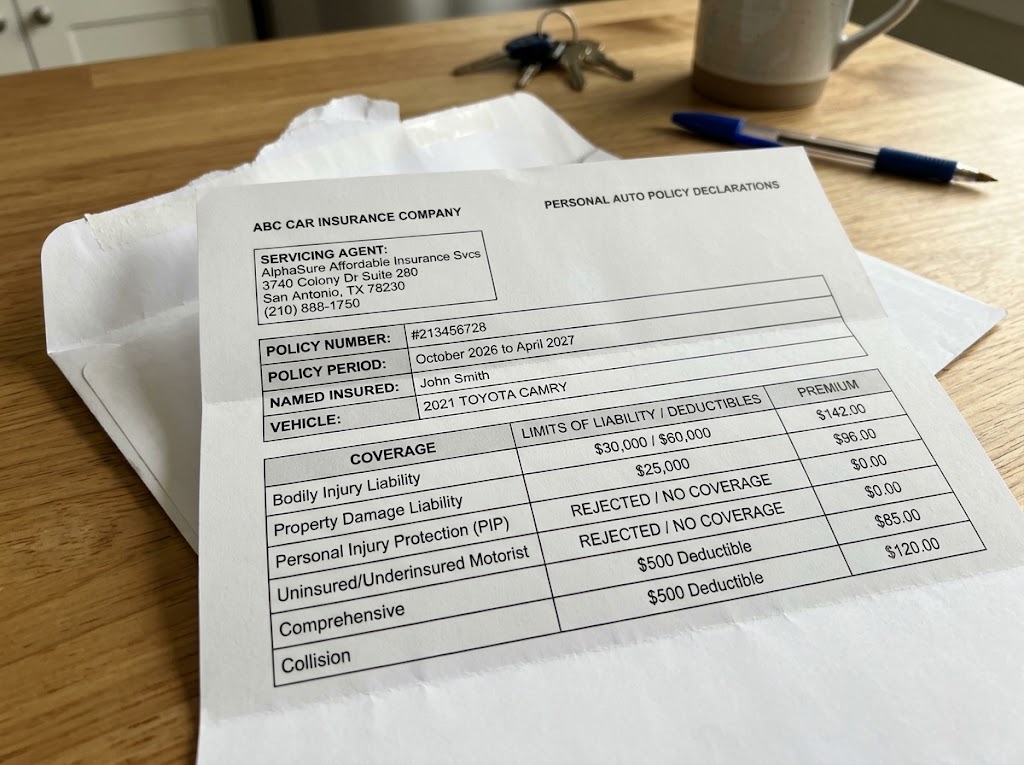
Many drivers buy a car insurance policy and never look at the paperwork again. They simply print their ID card and put the rest of the paperwork in a drawer. However, that habit might cost you unexpectedly after a wreck. Since 2001, I have worked as a Texas licensed insurance agent. Over the years, I have shared one golden rule with my clients. Always check your declarations page. If you are not paying for a coverage, or if it does not say “Included,” then you likely do not have it. Therefore, reading this single page is a real good way to be aware of the coverages that you bought or chose to reject.
What Is a Car Insurance Declarations Page?
Your car insurance declarations page, or “dec page,” is the front summary sheet of your policy. A full policy booklet contains dozens of pages of legal rules, definitions, and policy conditions. On the other hand, the dec page gives you the key facts at a glance. Specifically, it lists your covered drivers, vehicles, and coverage limits. Furthermore, it shows your deductibles and the price you pay for each item. For example, it may show that you have $100,000 Combined Single limit along with the premium associated with that coverage.
Your insurer sends a new dec page whenever you start, renew, or make changes to your policy. Therefore, you should review this sheet at least every six months.
The Car Insurance Golden Rule: No Price Means No Coverage
When you open your car insurance dec page, you will see a simple chart. One column lists the coverage types. The next column shows your limits. Finally, the last column displays the premium you pay.
Here is how my golden rule works. Every active coverage on your car insurance policy must show a dollar amount or the word “Included” in the price column. Conversely, if that space is blank, you do not have that protection. Sometimes, the page prints “Rejected” or “None” instead. As a result, the insurer will pay nothing for that type of claim.
Many Texas drivers assume they have “full coverage” because they buy Collision and Comprehensive coverage. However, “full coverage” is a myth. In fact, a policy might have coverage to fix your car after an accident but deny coverage for your medical bills.
Watch Out for Missing UM/UIM and PIP Coverage
Two vital protections on a Texas car insurance policy are Uninsured/Underinsured Motorist (UM/UIM) and Personal Injury Protection (PIP). Texas law requires companies to offer both on every new policy. If you do not want them, you must sign a written rejection form.
Unfortunately, many online car insurance shoppers sign digital forms without noticing what they waived. Later, their dec page shows a blank space next to UM/UIM or PIP.
Uninsured/Underinsured Motorist (UM/UIM): This coverage pays for your medical bills and car repairs if an uninsured driver hits you. It also covers hit-and-run wrecks and drivers with too little insurance.
Personal Injury Protection (PIP): This coverage pays medical bills for you and your passengers right away, no matter who caused the crash. In addition, PIP covers lost wages and other nonmedical costs while you recover.
If your dec page shows no charge for UM/UIM or PIP, you carry that financial risk yourself. Similarly, if you see no price next to Rental Reimbursement or Towing, your policy will not pay for a rental car or tow truck.
Why Your Home Insurance Dec Page Matters Too
This same rule applies to your home insurance declarations page. Your home dec page lists your dwelling limit under Coverage A and other structures, like fences and sheds, under Coverage B. Moreover, it lists your belongings under Coverage C.
However, standard home policies exclude several risks unless you pay to add them. For example, check your dec page for water backup or foundation coverage. If you do not see a price or the word “Included” next to those items, you lack that protection. Furthermore, standard home policies never cover flood damage. Consequently, you need a separate flood policy with its own dec page. Always check your wind and hail deductible too, since a 2% deductible can cost thousands of dollars out of pocket.
Shop Smarter With AlphaSure Affordable Insurance Services
Shopping for car insurance or home insurance alone can feel overwhelming. Many online quote websites remove PIP, UM/UIM, or rental coverage just to make a price look low. Because of this trick, you might buy a cheap policy with costly gaps.
Instead of guessing, work with a local independent insurance agency like AlphaSure Affordable Insurance Services. Unlike single-brand agents, an independent agent compares quotes from many trusted car insurance and home insurance companies at once. First, our team checks your current declarations page line by line. Next, we explain your deductibles and spot missing items. Finally, we shop multiple carriers to find affordable coverage that truly protects your family.
Review your car insurance and home insurance dec pages today. Make sure you see a price or “Included” next to every coverage you need. Contact AlphaSure Affordable Insurance Services today for a free policy review and quote!
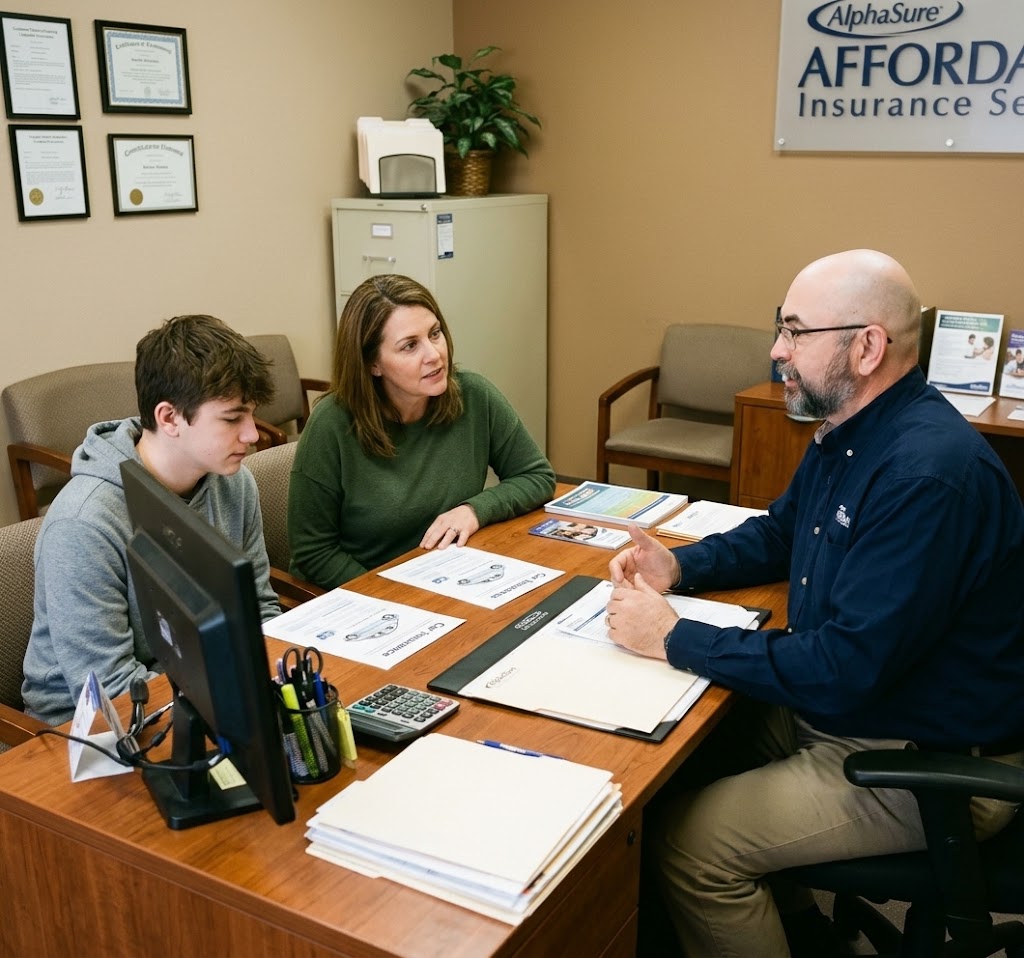
Getting a driver’s license serves as a huge milestone for teenagers. However, for parents, this exciting time often brings a moment of deep panic. That panic usually hits right when you think about your upcoming car insurance bill. When your teen is ready to drive, we need to talk. This is the exact time to check all available options. As a Texas-licensed insurance professional since 2001, I have helped countless families navigate this specific transition. I know firsthand that adding a young driver can strain a household budget.
However, paying for coverage does not have to drain your bank account entirely. Some companies charge much more than others when young drivers are added to a policy. Therefore, you must shop around and explore every single discount available to you. Today, we will look at the best ways to keep your car insurance premiums affordable while keeping your teenager protected on the road.
Why Teen Driver Car Insurance Premiums Run High
First, you must understand why companies charge so much money for young drivers. Teenagers simply lack crucial experience behind the wheel. Because they lack this real-world experience, they get into more minor fender benders and major traffic crashes. Insurance companies rely heavily on statistics to set their rates. Sadly, the data clearly shows that teen drivers present a much higher risk. As a result, your premiums increase to cover that elevated risk factor. But do not lose hope just yet. There are many proven ways to keep the cost of your car insurance in check.
The Power of Good Grades
Next, you should take a close look at your teenager’s report card. High school and full-time college students with good grades often qualify for major premium discounts. Insurers generally believe that responsible students make responsible drivers. Usually, your teen needs to maintain a solid “B” average or higher to earn this specific discount. You will need to show a recent report card or official transcript to your agent. Some of these good student discounts can actually last for several years. Therefore, you should strongly encourage your teenager to hit the books and study hard. It saves you money directly.
Take an Approved Driver Safety Course
Furthermore, formal driver training can play a role in lowering your monthly car insurance costs. You should consider enrolling your teen in an approved driver’s education course. When teenagers complete these safety programs, they usually earn a very solid discount. These formal classes teach young drivers essential defensive driving skills, local traffic laws, and safe habits. Always ask your agent which safety courses qualify for a discount before you sign up and pay.
Choose the Right Vehicle Carefully
Additionally, the specific type of car your teen drives impacts your rate heavily. You might feel tempted to buy them a flashy sports car or a brand-new lifted truck. You should rethink that idea immediately. It usually costs much less to insure an inexpensive vehicle or a sensible four-door sedan with a great safety rating. Used, reliable cars typically carry much lower premiums.
Also, if the chosen car is older and inexpensive, you might want to adjust your overall coverage. It might make perfect sense to skip comprehensive coverage entirely. Comprehensive insurance covers external damage from things like hail, fire, or theft. If the vehicle holds very little cash value, you can just stick with standard collision coverage and liability protection. This strategy will lower your monthly car insurance bill significantly.
Track Driving Habits with Car Insurance Telematics
Another great tool involves modern tracking technology. Today, many insurance companies offer telematics programs. If you let your insurance company track your teen’s driving habits, you will usually get a nice discount. These modern programs use a simple smartphone app or a small device plugged directly into the car’s dashboard. They closely monitor daily behaviors like hard braking, speeding, and late-night driving. If your teen drives safely, the company rewards you with lower rates. It also gives you a great way to monitor their driving habits when you are not riding in the passenger seat. There is one caveat. Depending on the company, enrolling in telematics could increase the rate if the driving not so “safe.” Talk to your agent about this.
The “Away at School” Car Insurance Discount
Later on, your teenager will likely graduate and head off to a college campus. When that life event happens, you might see even more financial savings. If your teen goes away to a college that sits far from home, and they leave their personal vehicle behind in your driveway, tell your agent. You can usually get a “resident student” or “away at school” discount. Since they are not driving the car every single day, the daily risk drops significantly. Furthermore, if your teen takes a car to an out-of-state college, you do not need to change your policy unless you legally register the vehicle in that new state.
Handling Learner’s Permits Correctly
What happens if your teen is still learning the ropes? Learner’s permits create a very unique situation for parents. In Texas, you are not legally required to buy separate insurance for a teen who only holds a basic permit. However, you must always let your insurance company know when a teen starts learning to drive in your vehicle. Do not hide this vital fact. If you fail to tell your company about the new student driver, you face massive financial risks. If they get into a car accident, the insurer could deny your claim entirely. They might even void your active policy or refuse to renew it later. Honesty always works best in this industry.
Adjusting Your Policy Deductibles
Another smart way to lower your car insurance premiums involves your policy deductibles. Your deductible represents the amount of money you pay out of pocket before your coverage kicks in to pay a claim. If you agree to carry a higher deductible, the company will lower your monthly premium. For example, raising your deductible from $500 to $1,000 can yield significant savings over a full year. However, it’s a good idea that exact amount of cash saved in an emergency bank account. You do not want to get stuck financially if your teen causes an accident.
Work with an Independent Insurance Agent
Finally, you never have to navigate this complex process alone. Finding the best rate requires valuable time and deep industry knowledge. Captive agents only sell products from one single parent company. If their internal prices run exceptionally high, you have absolutely no other options.
Instead, you should partner with a local independent insurance agent like AlphaSure Affordable Insurance Services. We actively help families shop for both car or home insurance across many different trusted carriers. Because some companies charge more than others for young drivers, we diligently compare quotes from multiple providers on your behalf. This vital step ensures you always find the absolute best coverage at the most affordable price. We gladly handle all the hard work for you.
Conclusion
Adding a young driver to your family household changes everything. It brings exciting new freedom for them and stressful new worries for you. However, the true cost of coverage does not have to cause constant panic. By utilizing good student discounts, adopting telematics, making wise vehicle choices, and exploring deductible changes, you can keep your costs manageable. Most importantly, start the insurance conversation early. Reach out to the San Antonio AlphaSure Affordable Insurance Services office or talk to one of our car insurance agent in Laredo today. Together, we will make sure your teenager stays fully protected on the road while keeping your hard-earned wallet secure.
Buying car insurance can feel overwhelming when you want a fair price for your family. Since 2001, I have worked as a Texas-licensed insurance professional. Over the last twenty-five years, I have helped thousands of Texas drivers protect their vehicles and their homes. During that time, one question comes up almost every single week. Why does an insurance company ask for the names of everyone living in my house?
Pretty much every insurance company requires you to list all household members on your application. Specifically, you must list anyone of driving age, which usually starts at age fourteen or fifteen. From there, you can list each household member as either a “rated” driver or an “excluded” driver. Understanding how this rule works can save you from a massive financial headache down the road.
Why Your Car Insurance Company Asks About Your Household
First, it helps to understand how car insurance works behind the scenes. The main goal of any insurance company is to price policies based on the risk that comes with them. To do this fairly, carriers look at several rating variables when they build your quote. For example, they check your driving history, the type of vehicle you drive, and where you park at night. In addition, another major rating variable is the number of drivers and household members living under your roof.
Why does your household count matter so much to an insurer? Simply put, anyone who lives in your home has daily access to your car keys. Even if your teenage child, relative, or roommate rarely drives your truck, they still share the same address. For instance, they might move your car out of the driveway one morning. Similarly, they might borrow your SUV when their own vehicle is in the repair shop. Because that shared risk exists every single day, the insurance company needs to know about every driving-age person in your home.
Rated Drivers vs. Excluded Drivers
When you apply for car insurance, you have two ways to handle the people who live with you. You can list each household member as a rated driver, or you can list them as an excluded driver.
First, let us look at a rated driver. A rated driver is a family member or housemate who has permission to drive your insured vehicles. The insurance company reviews their age, license status, and driving history. Then, the carrier uses those details to calculate your policy price. As a result, if a rated driver gets into an accident, your policy steps in to cover the damages up to your coverage limits.
On the other hand, what if a household member never touches your car keys? Perhaps your roommate owns a separate car and carries their own policy. In Texas, most companies allow you to list that person as an excluded driver. To do this, you sign a legal form called a Named Driver Exclusion. Consequently, the insurer will not charge you extra for that person’s age or driving record.
However, this exclusion comes with a strict warning. An excluded driver can never drive your vehicle under any circumstances. Even if they only drive two blocks to the pharmacy during an emergency, your car insurance policy provides zero coverage if an accident happens.
Why Hiding a Driver on Car Insurance Backfires
Of course, every family wants to keep monthly bills affordable. Therefore, it is tempting to withhold driver information when you apply for car insurance. That temptation grows even stronger when a household member is a young driver or has speeding tickets and past accidents on their record. After all, adding a high-risk driver can raise your monthly payment right away.
Furthermore, many drivers fall for a common myth about “permissive use.” They assume their policy will automatically cover a family member who only borrows the car once in a while. However, permissive use only applies to guests who do not live with you, such as a neighbor or a visiting friend. It does not cover undisclosed family members or roommates who live in your home.
When you leave a household member off your application to save money, insurance companies call it material misrepresentation. In plain English, hiding a driver breaks the terms of your insurance contract. Today, carriers use driver’s license records, vehicle registration logs, and public databases to verify household addresses. Eventually, the company will spot an unlisted driver at your home. When they find out, they can cancel your policy or bill you for hundreds of dollars in unpaid back premiums.
The Real Cost of a Denied Car Insurance Claim
Although hiding a driver might save a few dollars today, it will cost you much more in the long run. During my career in the insurance business since 2001, I have seen what happens when an insurance company denies a claim because of an unlisted driver. Frankly, it is a heartbreaking situation that no Texas family should ever go through.
Imagine that an unlisted family member borrows your car and causes a crash. First, the insurance adjuster will investigate the accident and confirm that the driver lives at your address. Next, because you left that person off your car insurance application, the company can deny the entire claim and void your policy.
Because of this, you must pay for those damages or bodily injury out of your own pocket. In addition, you will have to pay to fix or replace your own wrecked car, even while you still owe money to your auto lender. Worse yet, the injured people in the other car can sue you personally for their vehicle repairs, medical bills, and lost wages. One bad wreck with an unlisted driver behind the wheel can wipe out years of hard-earned savings. Clearly, short-term savings are never worth that kind of financial danger.
How AlphaSure Affordable Insurance Services Helps You Save
Fortunately, you do not have to hide household drivers to find a price that fits your budget. Instead, you can work with a local independent insurance agent like AlphaSure Affordable Insurance Services.
Unlike captive agents who only sell one brand of insurance, an independent agency works for you—not the insurance company. At AlphaSure Affordable Insurance Services, we shop across dozens of trusted carriers to help you find the best car insurance or home insurance in Texas. Every insurance company looks at tickets, accidents, and young drivers differently. For example, one carrier might charge a high rate for a driver with a speeding ticket, while another company offers a much lower price for the exact same household.
Moreover, our team will walk you through your options clearly and honestly. We can compare quotes with your family member listed as a rated driver versus signing an exclusion form if they never drive your cars. In addition, we uncover every discount you qualify for, including good student discounts, safe driving rewards, and multi-policy discounts when you bundle your home and car insurance together.
Call Us Today for a Free Car Insurance Review and Quote
Do not wait for a costly claim denial to find out that your policy has a dangerous coverage gap. Listing all household members the right way protects your family, your vehicles, and your wallet. Whether you need to add a teen driver, exclude a housemate who never drives your car, or lower your current rate after a ticket, our team is ready to help. Call us today at our local San Antonio insurance office or in our Laredo agency. AlphaSure Affordable Insurance Services is available for a free insurance review and quote!
I have worked as a Texas licensed agent in the insurance business for over 25 years. During that time, I have handled hundreds of different claims scenarios. Most claims end with quick help and a fair payout for my client. However, one real-life scenario from 2009 still stays with me today. That experience shows why every driver consider putting their car insurance on automatic bank draft.
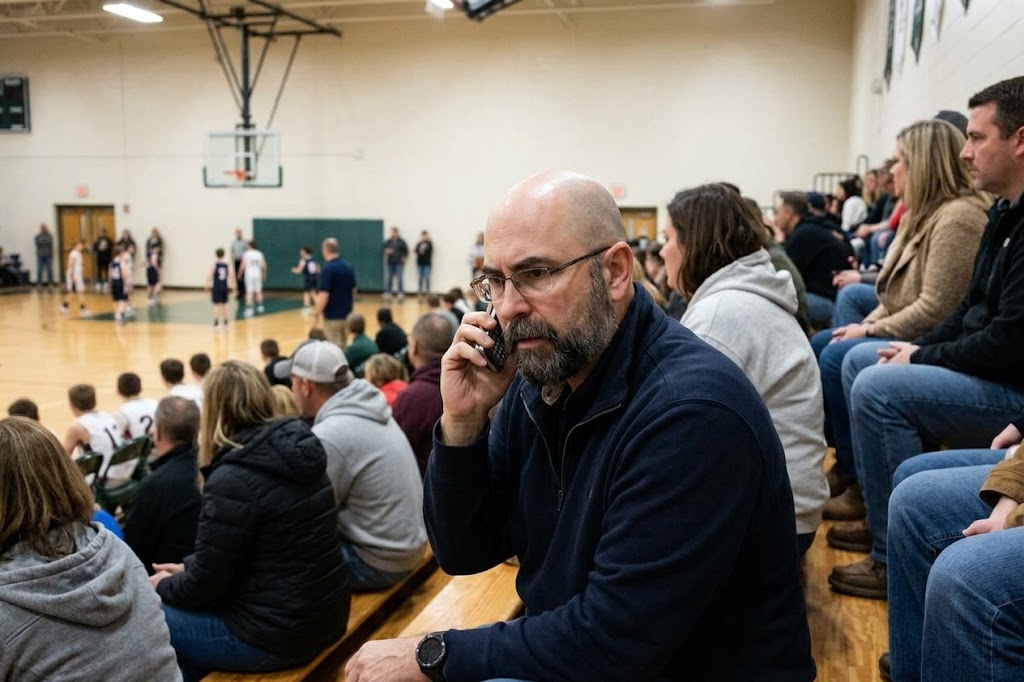
It happened on a busy Saturday evening back in 2009. I was sitting in the gym bleachers watching my kid’s basketball game when my cellphone rang. I never mind taking calls on my personal cellphone from my clients. In fact, I want my customers to reach me whenever they need real help. Still, when a customer calls late on a weekend, I know it is not just to say hi.
When I answered the call, my customer sounded frantic. Someone had just stolen his 2008 Ford F-150 pickup truck. Back in 2009, that truck was almost brand new and worth a lot of money. As we spoke, his voice shook with stress. He told me that he knew his car insurance policy was “about” to expire. Unfortunately, he was not sure of the exact expiration date.
An hour later, I walked through my front door and turned on my computer. My heart sank the moment I logged into the system. The screen showed that his car insurance policy had already expired yesterday on Friday. He had missed his renewal payment by just one day.
Because the policy expired before the thief took his truck, the insurance company would inevitably deny the claim. No coverage existed on Saturday evening when the theft took place. Simply put, this is the worst part of the insurance business: being the bearer of bad news. Telling a loyal customer that the carrier will deny his claim breaks my heart every single time. Not only did he lose his 2008 Ford F-150, but he also still owed the bank thousands of dollars on his auto loan.
How Automatic Bank Draft Protects Your Car Insurance
Thankfully, you can avoid this heartbreaking situation with one smart move. When you set up your car insurance with automatic bank draft, you protect your policy from accidental lapses. In the banking and insurance world, people also call this payment method ACH or Electronic Funds Transfer (EFT). With ACH payments, the insurance carrier drafts your monthly bill directly from your checking account.
As long as you keep the funds available in your checking account, your policy will draft from the bank account to pay itself on time every month. Consequently, your car insurance will not expire because you got busy at work or misplaced a paper bill in the mail. Family life moves fast between jobs, school events, and weekend games. Therefore, relying on memory alone to make a manual payment puts your truck, your car, and your finances at risk.
Furthermore, an automatic bank draft from a checking account is much safer than a recurring credit card or debit card payment. Credit and debit cards expire every few years. In addition, banks often cancel and replace debit cards when they detect suspicious activity at a store or gas station. When your card number changes, your next car insurance payment declines without warning. On the other hand, your checking account number and bank routing number stay the same for years. As a result, an ACH bank draft gives you the most dependable protection against a coverage lapse.
Car Insurance Discounts and Extra Convenience With ACH Payments
Aside from protecting your coverage, setting up your policy with ACH payments gives you convenience and big discounts. Insurance companies prefer automatic bank drafts because electronic transfers cost less to process and lower the risk of missed bills. Because of this, insurers pass those savings directly to you on your car insurance policy.
Specifically, you get four major benefits when you pay via automatic bank draft:
Upfront Auto-Pay Discounts: Most insurance carriers apply a generous discount to your car insurance premium as soon as you enroll in automatic payments and paperless billing.
Waived Monthly Installment Fees: Many companies add a $5 to $10 billing fee every month when you pay manually online, by phone, or with a card. However, carriers usually waive or reduce those installment fees when you draft from a checking account. Over twelve months, that can save you $60 to $120 in fees alone.
Lower Down Payments: Several insurers ask for a smaller down payment to start a new car insurance policy when you select recurring ACH payments from day one.
Continuous Coverage Savings: Insurance companies reward drivers who keep active coverage without a single gap. By preventing a lapse, you will maintain the prior insurance discount thereby keeping the renewal rates in check.
Here’s a pro-tip. To make automatic bank draft work smoothly, choose a monthly draft date that lines up with your payday. Also, set up a simple low-balance text alert on your banking app. That way, you always know the funds are ready before the draft date arrives.
Partner With AlphaSure Affordable Insurance Services Today
Picking the best payment method is just the first step in protecting your hard-earned assets. You also need a trusted advisor on your side when shopping for car insurance or home insurance. That is why working with a local independent insurance agent makes such a big difference.
Unlike captive agents who only sell policies for one company, an independent agency works for you. At AlphaSure Affordable Insurance Services, we shop across multiple top-rated insurance carriers to find the best coverage at the lowest price. Whether you need dependable car insurance for your pickup truck or affordable home insurance for your family house, our experienced agents compare the market for you.
Moreover, we make sure you never miss out on valuable savings. For example, we can bundle your car insurance and home insurance policies together to unlock extra multi-policy discounts. Above all, we help you set up convenient ACH bank drafts so your policy stays active when you need it most. Do not wait for a late-night weekend emergency to discover that your coverage lapsed. Reach out to AlphaSure Affordable Insurance Services today, and let our local team protect your vehicle, your home, and your peace of mind. Call our agents in our Laredo office or our San Antonio office today.
Hello, I am Fred Gonzalez. I have proudly worked as a Texas licensed insurance professional since 2001. Over the last two decades, I have seen every type of accident claim you can possibly imagine. Through all my years of experience, I have formed one very strong opinion. I firmly believe that the liability part of a car insurance policy is the most important part.
When you start shopping for car insurance, you probably think about your own vehicle first. Most drivers worry about door dings, severe hail damage, or a broken windshield. These physical damages are certainly annoying. However, fixing your own car is just a minor bump in the road. In reality, liability coverage protects your entire way of life. Liability coverage pays out when you cause an accident and hurt someone else. Without enough liability coverage, a simple drive to the grocery store can turn into a massive financial nightmare. Therefore, it is important to understand exactly how liability coverage works before you buy a policy.
Car Insurance Claim: The Inconvenience Versus The Crisis
Think about what happens if you ruin your own car in a bad crash. You will need to rent a vehicle for a few weeks. You must pay a deductible to the body shop. Eventually, you might even need to buy a brand-new car. This process is definitely a massive hassle. But, it is only a temporary inconvenience. You can easily replace broken metal, glass, and plastic.
On the other hand, imagine you cause a serious crash that injures another driver. Suddenly, you are dealing with ambulance bills, long hospital stays, and lost wages for the victim. Medical bills climb very quickly in today’s world. Furthermore, if the crash victim suffers long-term physical pain, they will likely hire a personal injury lawyer. An impending lawsuit can keep you awake for several nights! A judge could force you to pay hundreds of thousands of dollars directly out of your own pocket. The court can take your hard-earned savings, put a lien on your property, and even garnish part of your future paychecks. Consequently, you need high liability limits to build a strong wall between a tragic accident and your family’s financial future.
Understanding the Car Insurance State Minimum Limits
Every state requires drivers to carry a minimum amount of liability car insurance. For example, Texas law requires drivers to carry a minimum liability limit of 30/60/25. Let us break down exactly what these specific numbers mean for your wallet.
First, the policy pays up to $30,000 for bodily injuries to one single person. Second, it pays a maximum of $60,000 for all total bodily injuries when multiple people suffer harm in one single accident. Finally, the policy pays up to $25,000 for property damage per accident.
These minimum limits might sound like a lot of money at first glance. However, minimum liability limits are simply not enough when it comes to big bodily injury claims. Today, a single trip to the emergency room for severe injuries can easily exceed $30,000. Also, think about the expensive cars driving next to you on the highway. Many modern pickup trucks and luxury SUVs cost well over $60,000 to replace. If you total someone’s brand-new truck, your $25,000 property damage limit will run out instantly. As a result, you will have to pay the rest of the repair bill out of your own bank account.
The True Cost of an At-Fault Accident
Let us look at a real-world example to illustrate this huge danger. Imagine you glance at your phone for one second and rear-end a family minivan. The violent crash injures two parents and a young child. Their combined medical bills, physical therapy costs, and lost wages reach a staggering $150,000. If you only carry the Texas state minimum 30/60/25 limits, your car insurance company will only pay $60,000 total for all injuries. At the same time, not one person will receive more than $30,000 of bodily injury payments.
Where does the remaining $90,000 come from? It comes directly from you. The injured family can and will sue you for the massive difference. This type of lawsuit can bring immense daily stress into your life. You could lose your entire retirement savings in a flash. In addition, you might have to sell your personal assets just to satisfy the court judgment.
Because of these massive risks, insurance experts strongly advise drivers to buy much more than the minimum coverage. Higher liability limits provide vastly better protection for your financial future. Surprisingly, the monthly cost to increase your liability limits is usually quite small. For just a few extra dollars each month, you can upgrade your policy and buy added peace of mind.
Why You Must Protect Your Future Earnings
Many young drivers think they do not need high liability limits on the car insurance because they do not own a home or have large savings yet. This is a very dangerous myth. If you cause a serious crash, the lawyers will look at your future earning potential. A court judgment can follow you for many years. When you finally get a great job or try to buy a house, that old lawsuit can come back and haunt you.
If you have significant assets or own a home, you might even consider an umbrella policy. An umbrella policy adds another thick layer of liability protection above your standard car insurance liability limits. This extra coverage is incredibly cheap compared to the massive amount of protection it offers. So long as the underlying limits are satisfied, your local agent can quickly check if an umbrella policy is available.
The Incredible Value of a Local Independent Car Insurance Agent
Choosing the right car insurance can feel very confusing. You certainly do not have to make these big financial decisions completely alone. Instead, you should always partner with a local independent insurance agent. For instance, my agency, AlphaSure Affordable Insurance Services, proudly serves drivers across San Antonio, Laredo, and the rest of Texas.
Unlike big corporate websites or automated call centers, a local independent agent actually takes the time to go over insurance options. Independent agents work directly with many different insurance companies. Therefore, we can easily shop around to find the best possible rates for your specific budget. We will explain how your liability limits work in plain English. We can start the process over the phone or you can begin with a preliminary quote via our webpage.
Furthermore, an independent agent will help you spot dangerous gaps in your current coverage. We can provide different liability options so that you can feel comfortable with choosing the coverage that suits your needs. We can also help you find affordable home insurance to bundle with your auto policy for extra discounts. Ultimately, AlphaSure Affordable Insurance Services will help you secure the coverage you need to sleep well at night.
Take Action to Protect Your Family Today
In conclusion, you must never underestimate the extreme importance of liability coverage found in your car insurance policy. A wrecked vehicle is just broken metal, glass, and plastic. You can always fix a dented bumper or simply buy a new car. But a serious bodily injury claim can represent a massive, life-changing financial event. Do not leave your financial future exposed by carrying only the bare minimum limits.
Take action today to protect yourself. Review your current car insurance policy and carefully check your bodily injury liability limits. If you only see minimum coverage, you need to upgrade immediately. Reach out to a trusted independent expert like AlphaSure Affordable Insurance Services to protect your family the right way. We will gladly guide you toward a safer, more secure future on the road. If you prefer a face-to-face meeting, we can meet in person at the San Antonio office or Laredo office.
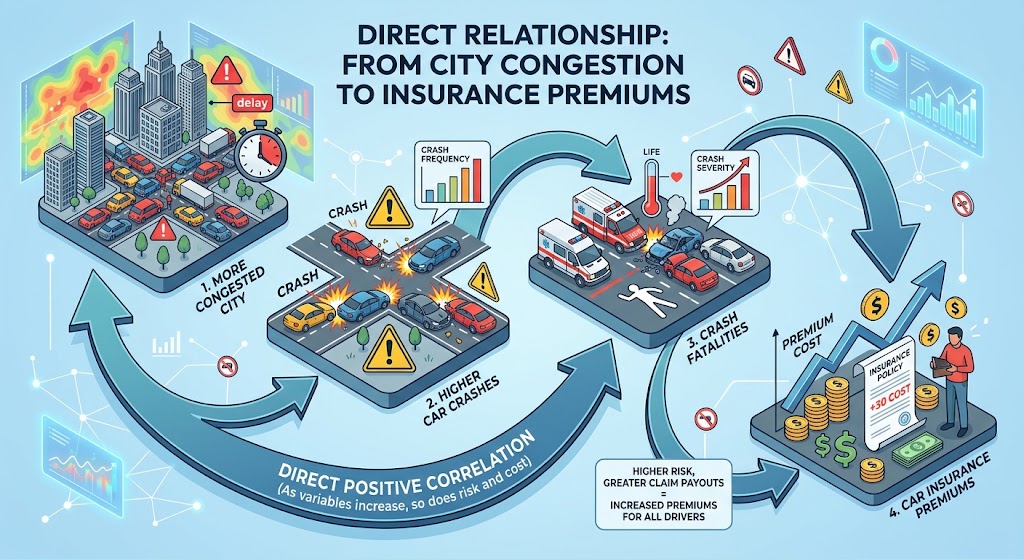
Texas is a massive state. Because of its incredible size, Texans drive everywhere. Whether you commute to work daily or take weekend road trips, you spend a lot of time behind the wheel. Sadly, more time on the road means a higher risk of accidents. If you live in a busy Texas city, you need good car insurance to protect your family and your wallet.
Today, we will compare car crash statistics between two major Texas cities: San Antonio and Laredo. We will also explore how these numbers impact your local roads and why proper coverage matters so much.
The Raw Numbers: San Antonio vs. Laredo
When you look at the crash data, you see a massive difference between San Antonio and Laredo. The Texas Department of Transportation (TxDOT) is the state agency that tracks these crash numbers every year. In 2024, according to the Texas Department of Transportation, the state recorded thousands of wrecks in both regions. However, San Antonio saw far more accidents than Laredo.
Metric (2024 TxDOT Data)
San Antonio
Laredo
Total Crashes
39,805
6,512
Fatal Crashes
162
18
Total Fatalities
170
18
As the table shows, San Antonio reported roughly 39,800 total crashes. On the other hand, Laredo reported roughly 6,500 crashes. Therefore, San Antonio experiences about six times as many car accidents as Laredo.
This difference makes sense when you compare their populations. San Antonio has nearly 1.5 million residents. Meanwhile, Laredo has around 250,000 residents. More people naturally lead to more crowded roads, heavy congestion, and more frequent fender benders.
Diving Deeper: Impact on Car Insurance by San Antonio’s Congested Highways
San Antonio is a sprawling urban center. It features a complex network of major highways. Interstates like I-10, I-35, and freeways like Loop 1604 carry millions of cars every single week. Because of this heavy traffic, drivers face extreme congestion during morning and evening rush hours. Frustrated drivers often speed, change lanes aggressively, or follow other cars too closely.
Furthermore, according to the US Census, San Antonio was the fourth fastest growing city in 2024 and grows larger every day. New residents move to the city constantly. This rapid growth puts a heavy strain on the local infrastructure. Construction zones pop up everywhere, which confuses drivers and leads to unexpected sudden stops. Consequently, the high crash volume directly influences how insurers calculate car insurance premiums. According to Fred Gonzalez, a 25 year veteran of the insurance industry states, “indeed, ever since I’ve worked in the insurance business, premiums in bigger cities are much higher than if you lived in a smaller city.” Moreover, he states, “car insurance companies have made their pricing models very elaborate and moving from one zip code to another, even if it’s within the same city, may cause a change in premium, up or down.” If you live in an area with a high crash rate, you might pay more for your auto policy because the risk is higher.
Diving Deeper: Laredo’s Heavy Commercial Traffic
Laredo tells a very different story. While it lacks the massive population of San Antonio, it holds a unique title. Laredo operates as the busiest inland port in the United States. Every day, thousands of 18-wheelers and commercial trucks cross the border. They transport billions of dollars in commercial goods. According to the Bureau of Transportation Statistics Laredo saw 12,882,715 trucks cross the border in 2023.
Because of this booming trade industry, Laredo drivers share the road with massive semi-trucks daily. An accident involving a standard passenger vehicle and a large commercial truck often results in heavy physical damage. While Laredo has fewer total crashes, the constant presence of heavy trucks makes driving risky in a different way. Truck drivers deal with huge blind spots and long stopping distances. If you drive a small sedan in Laredo, you need good car insurance policy to cover potential damages from an 18-wheeler collision.
The Financial Impact: Understanding Liability Payouts
After a crash, someone has to pay for the medical bills and the damaged property. This is where auto liability coverage steps in. Insurance companies do not publicly share the exact total sums they pay out in specific cities. However, we know that they pay millions of dollars every single year.
In Texas, state law requires the at-fault driver to pay for the damages. When a driver causes a wreck in San Antonio, their car insurance pays the victim. Because San Antonio has almost 40,000 crashes a year, insurance companies process a massive number of claims there. Legal data shows that the average litigated auto accident settlement in San Antonio hovers around $90,000. In Laredo, standard accident settlements sit slightly lower, averaging closer to the state median of $65,000 to $75,000. However, Laredo’s commercial truck accidents can trigger massive payouts because commercial policies carry much higher limits.
State Minimums vs. Real Protection
Every driver in Texas must carry a minimum amount of car insurance. The state requires a basic 30/60/25 liability policy. This means your insurance pays up to $30,000 for injuries per person, $60,000 for total injuries per crash, and $25,000 for property damage.
However, these minimum limits often fail to cover modern medical costs and repair bills. Think about it carefully. If you total someone’s brand-new luxury SUV in San Antonio, $25,000 will not replace that vehicle. If you cause a severe crash in Laredo, $30,000 will not cover a week in the hospital. If your policy limits run out, the victims can sue you personally for the rest of the money. Therefore, you should always buy more coverage than the state requires. Indeed, according to Fred Gonzalez, “liability is probably the most important part of a car insurance policy.” Thus to be well protected, you need a robust policy to shield your financial future.
How AlphaSure Affordable Insurance Services Can Help with Car Insurance
Shopping for the right car insurance feels overwhelming. Many people just go online and buy the cheapest policy they can find quickly. This mistake can cost you dearly after a bad accident. Instead of guessing, you should work with a local independent insurance agent like AlphaSure Affordable Insurance Services.
Unlike big-name captive companies that only sell one single brand, AlphaSure Affordable Insurance Services partners with multiple carriers. They do the hard work for you. Their agents will compare rates from different companies to find you the coverage you are seeking and at the most affordable price. Because they live and work in the area, they understand the local risks.
In addition to auto policies, AlphaSure Affordable Insurance Services can help you bundle your coverage. You can save a lot of money by buying your car insurance and your home insurance together with the same carrier. A trusted independent agent will review your current home insurance and give you options so you can make an informed decision. Thus, you will have peace of mind knowing you have gone over the options available to you so you can make the best decision.
Conclusion
Driving in Texas always carries some risk. San Antonio deals with intense urban traffic and a very high volume of crashes. Laredo faces the unique challenge of heavy commercial truck traffic. Both cities present clear, distinct risks on the road.
To stay safe, always practice defensive driving. Put away your cell phone, obey the speed limit, and watch out for large trucks. Most importantly, review your car insurance policy today. Call a local expert like AlphaSure Affordable Insurance Services at their Laredo or San Antonio office . Let them evaluate your car insurance and home insurance limits. With the right team on your side, you can hit the Texas highways safely and confidently.
In one sentence: The MCS-90 is a federal endorsement that guarantees the public gets paid after a covered trucking accident, even in some situations where your own policy would not pay you.
A Short Glossary Before the Details
MCS-90
An endorsement the FMCSA requires on liability policies for most for-hire interstate motor carriers. It attaches to your trucking liability policy rather than standing on its own.
The public
Other drivers, pedestrians, and property owners injured or damaged by your truck. They are the people this endorsement is written for.
Reimbursement
The insurer’s right to recover money from the carrier after paying a claim the policy itself did not cover.
What It Does Not Do
The MCS-90 does not repair your tractor, replace your cargo, or broaden your coverage. It also does not replace the separate intrastate filings Texas handles through TxDMV. Owner-operators working with AlphaSure Affordable Insurance Services in San Antonio, TX are often surprised to learn it offers them no direct benefit at all.
Where It Can Cost a Carrier Money
Suppose a claim arises involving a driver or unit the policy does not list. The MCS-90 may still require the insurer to pay the injured party up to federal minimum limits. The insurer can then turn to the carrier to be paid back. That is why keeping every truck and driver properly scheduled matters so much.
Three Habits That Keep This From Becoming a Problem
Report every new unit and hired driver before the first dispatch
Remove sold or parked trucks promptly so records stay accurate
Have you ever wondered what happens if two different car insurance policies cover the exact same vehicle? This situation happens more often than you might think. Maybe you bought a new policy and simply forgot to cancel your old one. Perhaps two different family members bought separate coverage for a shared family vehicle. Sometimes, people mistakenly think that doubling up on policies will give them double the protection.
No matter how the situation happens, double coverage creates a massive headache if an accident occurs. In the great state of Texas, the law provides clear rules to decide which insurance company must pay first. Today, we will explore these important rules. We will break down exactly how claims work when two policies clash. Furthermore, we will explain the math behind shared claims. Finally, we will show you how to untangle this mess and find the right coverage with a trusted local agent.
The Golden Rule: Car Insurance Follows the Auto
First, you need to understand the absolute golden rule of auto coverage. In Texas, car insurance follows the vehicle, not the driver.
What does this rule actually mean for you? It means the policy attached directly to the car will almost always pay first. Insurance experts call this main coverage the “primary” policy.
For example, imagine you let a good friend borrow your truck to move some furniture. While driving your truck, your friend runs a red light and causes a bad wreck. Because the insurance follows the vehicle, your insurance policy pays the victim’s bills first. Your friend’s personal insurance policy acts as a backup.
Industry professionals call this backup coverage the “secondary” or “excess” policy. The secondary policy only steps in if the crash damage costs more than your primary policy limits. Therefore, you always want to know whose name sits on the car title. Legal ownership heavily drives the entire claims process. When you know who owns the car, you usually know who pays first.
A Real-Life Scenario: The College Student
Let us look at a specific, real-life scenario to make these rules easy to understand. We can explore what happens when family members create accidental double coverage.
Imagine a family living in Laredo, Texas. The mother owns a reliable sedan and buys a car insurance policy to protect it. Her policy has a $500,000 Combined Single Limit (CSL) for liability. This generous limit means her policy can pay up to half a million dollars for any combination of bodily injuries and property damage caused by a crash.
Next, her son packs up his belongings and takes that exact sedan to college. While living away at school, the son decides he wants his own insurance. He buys a basic car insurance policy with the minimum limits required by Texas law. These state minimums provide $30,000 for bodily injury per person, $60,000 for bodily injury per accident, and $25,000 for property damage.
However, the mother forgets to cancel her large $500,000 policy. Now, two active policies cover the exact same vehicle at the exact same time.
Suddenly, disaster strikes. The son drives to the store and causes a massive accident on the highway. He hits a luxury sports car and causes a staggering $250,000 in property damage. When the victim files a claim, the insurance adjusters discover both active policies.
Which car insurance policy pays for this massive bill? How much money does each company pay? The answer depends entirely on one specific detail: who legally holds the title to the car.
Scenario A: The Mother Still Owns the Car
In most family situations, parents simply hand the car keys to their kids. They do not officially transfer the title at the Department of Motor Vehicles. If the mother still legally owns the car in this scenario, her large policy takes the primary spot.
Why does her policy pay first? Because her car insurance policy covers an “owned” vehicle. Standard insurance rules clearly state that any coverage for a non-owned vehicle acts strictly as a backup. Since the son does not legally own the sedan, his new policy serves only as excess coverage.
In this specific situation, the mother’s policy pays the entire $250,000 claim. Her large $500,000 limit easily covers the total property damage. Because her policy handles the whole bill, the son’s primary limits never trigger. His insurance company pays absolutely zero dollars. Consequently, the mother’s insurance rates will likely increase significantly upon her next renewal.
Scenario B: The Mother Transferred the Title
Now, let us flip the story to see a different outcome. Suppose the mother officially signed the vehicle title over to her son before he left for college. He legally owns the car now. However, the mother simply forgot to call her agent and cancel her old policy.
Because the son legally owns the car, his minimum-limit policy will now become the primary car insurance. The mother no longer has a true “insurable interest” in the vehicle because she officially gave it away. Therefore, her old policy now acts as the backup.
As a result, the son’s insurance company steps up to the plate first. They pay their absolute maximum property damage limit, which is only $25,000. This small payment leaves a massive $225,000 unpaid balance.
At this critical point, the mother’s $500,000 backup policy kicks into action. Her insurance company pays the remaining $225,000 to satisfy the victim’s claim. Both companies work together, but they pay based strictly on who owned the vehicle.
Scenario C: The Pro-Rata Share
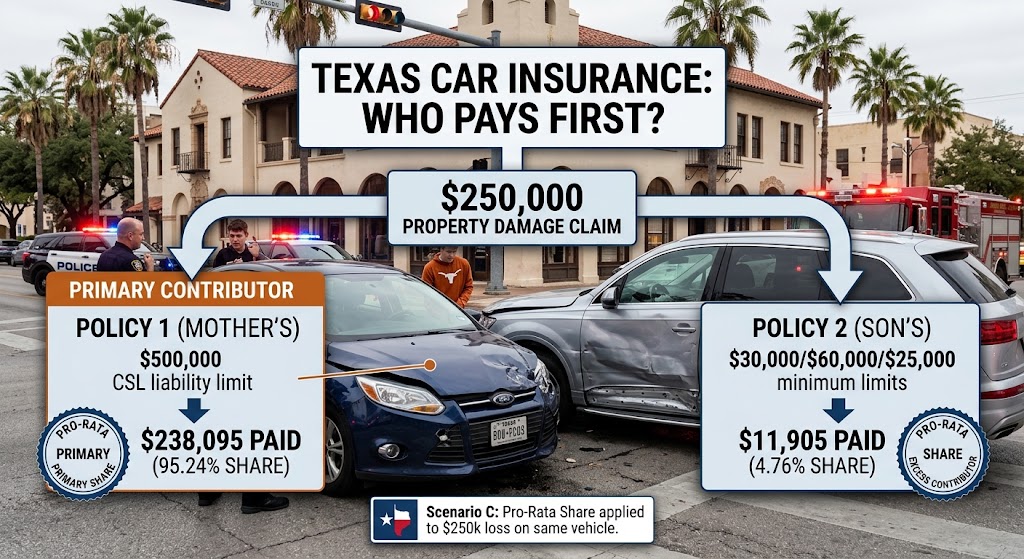
Sometimes, insurance situations get extremely messy and complicated. What if the mother kept the title, but the son managed to list the car as an “owned” vehicle on his new policy? If both insurance companies investigate the claim and accept their policies as primary, Texas law uses a special “pro-rata” rule.
Pro-rata means the two insurance companies will share the final bill. They split the total cost based on the size of their individual coverage limits. They do not split the bill exactly in half. Instead, the company with the bigger policy pays a much bigger piece of the pie.
Let us do the exact math for this scenario. The mother has a $500,000 limit for property damage. The son has a $25,000 limit for property damage. Together, they bring $525,000 in total available coverage to the table.
To find the mother’s share, we divide her $500,000 limit by the $525,000 total. This calculation shows she holds about 95% of the total coverage. Therefore, her car insurance company pays 95% of the $250,000 crash. Her company will write a check for exactly $238,095.
Next, we look at the son. He holds the remaining 5% of the total coverage. His company will pay 5% of the crash, or roughly $11,905. Both insurers coordinate their payments to ensure they cover the victim completely without ever double-paying for the same damage.
Why Double Car Insurance Coverage Hurts You
Reading about these various scenarios might make double coverage sound like a great safety net. However, you should never carry two primary policies on one car on purpose. Doing so hurts you in several major ways.
First, you waste your hard-earned money. You pay two expensive premiums every single month for overlapping coverage that you cannot fully use. You cannot legally collect double the money for a single claim. Insurance laws strictly forbid you from profiting from an auto accident. The principle of indemnity says you can only restore what you lost.
Second, double coverage creates an absolute nightmare during the claims process. When two companies discover each other, they almost always argue over who pays first. This intense arguing delays your payout. You might wait weeks or even months for the companies to settle their legal dispute.
Meanwhile, the accident victim might decide to sue you personally because they grow tired of waiting. You want your car insurance claims handled quickly and smoothly. Double coverage may lead to a slow and stressful experience.
How a Local Independent Car Insurance Agent Can Help
You can easily avoid these expensive mistakes by working closely with a trusted professional. You should never guess when it comes to policy contracts and liability limits. Instead, you need an experienced guide to protect you.
This is exactly where a local independent insurance agent like AlphaSure Affordable Insurance Services steps in to help you. Unlike captive agents who only sell one single brand, independent agents are contracted with several car insurance companies. Thus, they can help you by providing access to several companies with one auto insurance quote request.
If you need to change your car insurance because a child goes away to college, AlphaSure Affordable Insurance Services can quickly evaluate your entire situation. They will guide you so that you have the right coverage without any overlapping policies. Many times, they can handle the old cancellations, while binding a new policy. This way, there is no lapse in coverage.
Furthermore, the friendly agents at AlphaSure Affordable Insurance Services do not just handle auto insurance. They can also help you shop for home insurance. Bundling your car insurance and home insurance through one company unlocks massive discounts.
Most importantly, you gain incredible peace of mind knowing professionals are there to provide sound advice and guide you in the event of a claim.
Wrapping Up the Car Insurance Puzzle
Navigating the complex car insurance world often feels like wandering blindly through a maze. Rules about primary policies, secondary policies, and pro-rata shares confuse almost everyone. However, you do not have to figure out this complicated puzzle alone.
Always remember that insurance generally follows the vehicle in Texas. Whoever holds the actual title usually dictates which policy pays first. If you face a major life change, such as sending a kid to college or buying a new car, update your policies immediately. Always cancel your old coverage as soon as your new coverage begins.
Above all, reach out to local experts like AlphaSure Affordable Insurance Services. They will gladly help you shop the market. They will find you the best car insurance and home insurance rates while keeping your coverage well aligned. Protect your car, protect your wallet, and drive safely on the Texas roads!